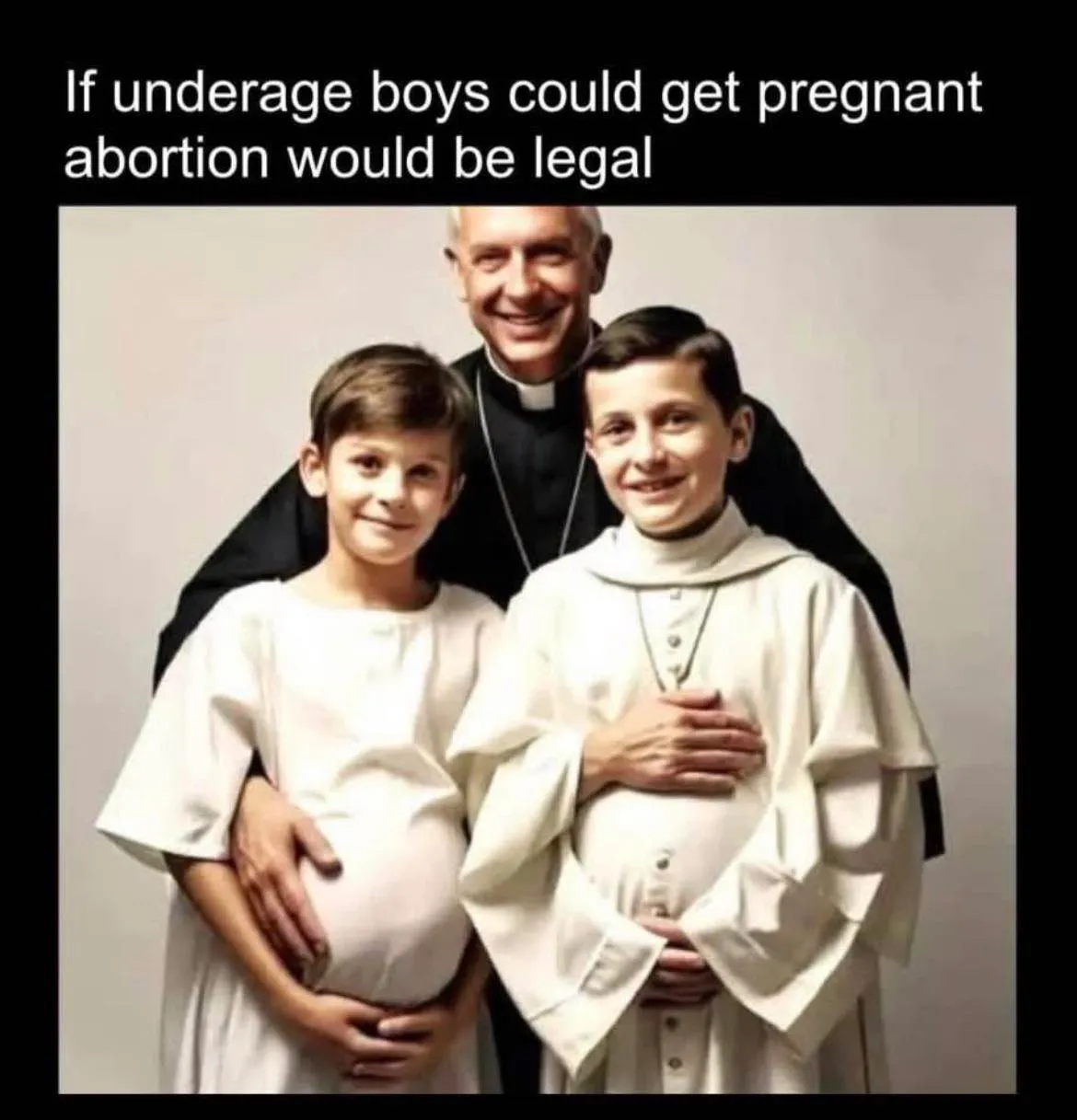
Imagine a world where teenage boys could get pregnant. How long would abortion remain restricted? That’s the uncomfortable question pulsing beneath this viral image. It isn’t subtle, and it isn’t meant to be. It’s satire aimed squarely at power.
The message is blunt: reproductive laws have long been shaped by institutions dominated by men who will never face pregnancy themselves. When those same institutions wrap their authority in religious language, frustration turns into anger. The image of a smiling priest standing behind pregnant boys isn’t random. It calls out the moral authority claimed by religious leadership while pointing to the deep hypocrisy many see in how sexual ethics and reproductive control are enforced.
For decades, organized religion—particularly conservative Christian structures—has fought to limit abortion access. That fight is framed as moral defense. Yet critics argue it often sidelines the autonomy, health, and lived realities of women and girls. When religious doctrine influences public law, the consequences land on bodies that the rule-makers don’t inhabit.
The meme resonates because it flips the script. If those writing the rules could physically experience pregnancy, the calculation might look different. Access might expand. Compassion might override dogma.
Satire like this doesn’t aim to be polite. It aims to expose imbalance. Whether one agrees or not, the image forces a question many religious leaders would rather avoid: who bears the burden, and who holds the power?